
The Chief Investment Officer (CIO) leaned back in his chair, scanning the quarterly reports spread across his desk. For three consecutive quarters, he saw the Net Operating Income (NOI) in his senior living portfolio decline… it was beginning to raise questions among board members.
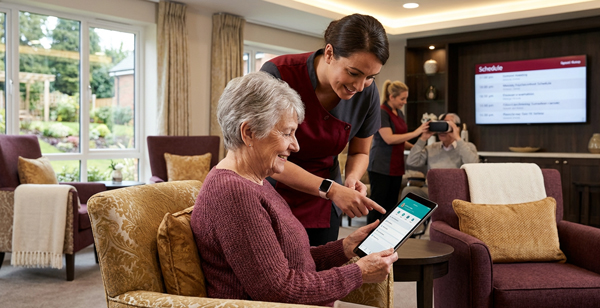
Yet across theindustry, another CIO was enjoying a completely different narrative: hertech-forward communities continued to post 20% annual NOI gains andconsistently held occupancy near 95%.
The contrast betweenthese two leaders wasn’t about luck or timing; it was about vision. One sawtechnology as a cornerstone of strategic growth; the other viewed it asoptional. And while the financials clearly reveal the gap, the truth behindthese stories is even more encouraging: technology isn’t just boosting returns;it’s:
· Elevating care
· Supporting teams
· Enriching residents’ lives
This dynamic isunfolding nationwide as institutional investors, private equity groups, and Real Estate Investment Trusts(REITs) navigate a profound shift in what drives senior living performance.The data tells a compelling, hopeful story: communities that embrace digitaltransformation are outperforming traditional operators across every financialdimension that matters; all while delivering smoother operations and moreconnected, fulfilling experiences for seniors and staff.
By 2025, investorsplan to grow their senior living exposure by 78%, fueled by powerfuldemographic trends and improved sector performance. But the strongest returnsare going to those who understand that senior living is no longer simply a realestate asset class; it’s a technology-enabled care and services business. Infact, during Q1 2025, senior housing generated the highest NCREIF returnsacross all property types, outperforming other real estate classes by nearly 60basis points.
Yet beneath theseencouraging headlines lies a lesson that is reshaping investment playbooks: technologymust be central, not supplemental, to strategy. What was once passed as an optionalamenity is now an essential driver of occupancy, margins, retention, andportfolio value.
The DigitalDividend: Quantifying Technology's Impact on Returns
Investors now havemeasurable evidence that digital transformation generates meaningful,consistent, and compounding financial benefits. Communities implementingcomprehensive digital strategies are experiencing:
· 150–200 basis points of NOI improvement each year
· Occupancy rates reaching 95%, significantly above the 87.4% industryaverage
These numbers areespecially compelling when paired with real-world case studies. GraceManagement’s portfolio of 60 communities saw:
· A 28% reduction in staff workload
· Doubling of occupancy rate growth vs. industry benchmarks
· EBITDA margin expansion from 24% to 35% on stabilized assets
The financial upsideextends across the entire operating model. Communities using AI-poweredplatforms report a length of stay improvement of 4 - 6 months, translating into$8,000–$12,000 in additional revenue per unit annually. Predictive staffinganalytics reduce labor expenses by 15–20% while improving service quality intothe 90th percentile.
The technologyinvestment cycle creates a compounding effect on returns. Communities thatallocate 9.78% of their capital budget to technology infrastructure areexperiencing faster lease-up periods, higher retention rates, and premiumpricing power compared to properties that lag in digital adoption. This premiummanifests in multiple ways: reduced time to stabilization, enhanced NOImargins, and increased exit valuations when assets are divested.
Private equitygroups have taken notice. Tech-enabled senior housing assets consistentlycommand 25–50 basis point cap rate premiums over traditional communities; clearevidence of investor confidence in the operational resilience and profitablegrowth generated by digital transformation.
WorkforceTechnology: Supporting Teams and Strengthening Margins
The senior livingworkforce is the heart of the industry, and it’s under historic pressure. With10,000 Baby Boomers turning 65 daily and staffing shortages projected to reach355,000 by 2030, communities must empower their teams in new and effectiveways. Technology delivers exactly that.
In communities thathave adopted digital workforce tools, staff report greater balance, lessadministrative burden, and more time for meaningful resident interactions.Scheduling platforms and mobile communication systems reduce administrativetime by 30–40 minutes per caregiver every shift. AI-powered staffingoptimization reduces overtime, prevents burnout, and gives operators thereal-time flexibility needed to maintain service quality.
Communitiesimplementing these solutions have seen:
· A 25–35% improvement in nursing retention
· Significant reductions in turnover-related costs; often $15,000–$25,000per employee replaced
Technology doesn’treplace caregivers; it supports them, lifts them, and helps them focus on whatbrought them into the profession: caring for others.
For investors, thebenefits are just as encouraging. Workforce technology often delivers full ROI within18–24 months. A $150,000 investment in digital workforce systems routinelyyields $200,000–$300,000 in annual savings, strengthening NOI and paving theway for stronger valuations.
ResidentExperience Technology: The New Engine for Pricing Power
Today’s seniorsbring smartphones, tablets, and digital expectations with them; they wantconvenience, connection, and safety. Communities offering tech-enhancedexperiences can meet these desires in ways that feel empowering and personal.
As a result,tech-forward communities consistently achieve:
· 8–12% occupancy premiums
· 10–15% monthly fee premiums
· 98%+ resident satisfaction scores
Digital livingplatforms, including high-speed Wi-Fi, smart apartment features, and residentengagement apps, help residents stay connected, independent, and engaged.Telehealth capabilities reduce ER visits by 35–40% and allow residents toremain in place as their needs evolve.
Smart safety systemsdon’t just prevent falls; they provide peace of mind. They reduce liabilityinsurance costs by 15–20% while giving families confidence that their lovedones are in a supportive and proactive environment.
From inquiry tomove-in, the impact is unmistakable:
· Inquiry-to-tour conversion rates improve by 150–200 basis points
· Tour-to-move-in conversions rise similarly
This accelerateslease-up, supports higher ongoing occupancy, and strengthens long-term revenue.
OperationalEfficiency: The Most Direct Path to Margin Expansion
Digitaltransformation improves nearly every operational metric, and in senior living,operations are where margins are won or lost.
Communities usingintegrated digital platforms consistently report:
· 15–25% NOI improvement within two years
· 20–30% reductions in administrative labor
· 10–15% savings on utilities through smart building systems
· 8–12% savings through digital procurement optimization
These improvementsmake operations not only more efficient but also more resilient. Predictivemaintenance systems reduce unexpected repair costs. Automated HVAC and lightingsystems adjust to usage patterns and weather conditions. Digital care documentationsupports compliance, improves care quality, and protects communities fromregulatory exposure.
With technology,communities can operate at higher occupancy with leaner staffing ratios withoutsacrificing service quality. This creates sustainable margin expansion thatcompounds over time.
CapitalAllocation Strategy: Building Technology-Forward Portfolios
Sophisticatedinvestors now place technology alongside location, operator quality, andphysical plant when evaluating assets. Digital infrastructure has become avital due diligence pillar, serving as both an offensive growth driver and adefensive risk mitigant.
Communities withestablished technology systems earn:
· 8–15% valuation premiums
· Faster integration timelines
· Lower modernization costs
· Reduced execution risk in value-add strategies
Value creationthrough technology upgrades can add 20–30% in asset value over 3–5 years,powered by NOI growth and cap rate compression.
At exit,tech-enabled assets appeal to a broader buyer pool, from real estate investorsseeking stability to healthcare operators targeting operational performance.This demand supports competitive processes and optimal pricing.
Market Dynamics:A Generational Opportunity Meets Rising Expectations
Demographics remainone of the strongest tailwinds in the U.S. economy. Every year brings millionsmore seniors into age brackets where senior housing becomes relevant. By 2030,every Baby Boomer will be 65 or older, and the 85+ population, primed forhigher-acuity senior living, will grow rapidly through the 2040s.
This creates anextraordinary opportunity. But it also heightens competition.
Familiesincreasingly evaluate communities through a digital lens:
· Do they offer telehealth?
· Is Wi-Fi strong and reliable?
· Are engagement tools available?
· Do care teams use modern systems that ensure safety, communication, andproactive care?
Communities thatanswer “yes” to these questions shine in the market. Those that don’t fallbehind on occupancy, pricing, and investor perception.
Risk Management:Technology as a Foundation for Stability
Technology alsoplays a vital role in protecting asset values:
· Compliance tools reduce regulatory risk
· Cybersecurity protects sensitive information
· Remote monitoring and automated systems support continuity duringdisruptions
The lessons ofrecent years are clear: digitally advanced communities respond more effectivelyto staffing challenges, health concerns, and unexpected operationaldisruptions.
Investors andlenders recognize this resilience and reward it with improved financing terms,lower insurance premiums, and stronger underwriting assumptions.
FinancialEngineering: Strengthening Capital Structure Through Technology
Technology reducesvolatility and improves predictability; two qualities lenders and capitalpartners value deeply.
Communities withstrong digital infrastructure often benefit from:
· Improved debt terms
· Higher leverage capacity
· Lower insurance costs
· More accurate and timely financial reporting
Digital platformsprovide real-time dashboards and automated analytics that improve assetmanagement, investor relations, and long-term planning.
ImplementationRoadmap: A Clear and Confident Path Forward
Successful technologicaltransformation requires a structured, thoughtful approach rooted in bothfinancial discipline and operational care. The most successful operators beginby:
· Conducting a comprehensive technology audit
· Strengthening core infrastructure (Wi-Fi, security, networking)
· Implementing resident-facing and workforce-enhancing tools
· Phasing in advanced analytics and predictive technologies
· Investing heavily in staff training and change management
· Measuring performance rigorously, both operationally and financially
This approachminimizes disruption, accelerates ROI, and ensures that technology trulysupports the people who rely on it.
TheFuture-Forward Investment Thesis
The senior livingindustry stands at an inspiring turning point. Technology is no longer a“nice-to-have”; it’s the key determinant of competitive success, residentsatisfaction, workforce stability, and long-term asset value.
The data is clear,the path is proven, and the opportunity is significant: tech-enabledcommunities outperform across every meaningful metric.
Forward-thinkinginvestors are using digital transformation to unlock a new era of growth, onethat benefits not only portfolios but also the residents, families, andcaregivers who rely on these communities every day.
By embracing atechnology-forward strategy, investors can capture:
· Superior NOI and EBITDA performance
· Stronger occupancy and pricing power
· Greater operational resilience
· Enhanced exit valuations
· A meaningful role in transforming senior care for the better
The shift towardtech-enabled caring isn’t a future projection; it’s happening now. And itpresents one of the most compelling, impactful investment opportunities of thecoming decade.
Ready to Lead theFuture of Senior Living?
Download the Tech-EnabledCare Investment Playbook, your comprehensive guide to evaluating, underwriting,and scaling technology-forward senior living investments.
Inside, you’ll find:
· In-depth case studies
· ROI calculators
· Due diligence frameworks
· Implementation timelines
· Proprietary metrics
· Financial modeling templates
These tools have supportedover $2 billion in successful senior living technology investments.
[Download theComplete Investment Playbook]
Gain the insights that differentiate top-performing portfolios from therest—and position yourself to lead in the future of tech-enabled caring.